01
Why South Ari Is Different
The South Ari Marine Protected Area, commonly called SAMPA, is one of the Maldives' best-known marine conservation areas. The official Maldives Protected Areas authority identifies the presence of whale sharks throughout the year as a defining feature of the region. That does not mean a sighting is available on demand. Whale sharks are wild animals, and their movements cannot be scheduled around a holiday itinerary. What South Ari offers is an established setting for responsible observation, with designated areas and management arrangements intended to help protect the marine environment. For visitors researching Maldives whale sharks, this distinction is important. The attraction is a living animal in its natural habitat, not an experience that can be guaranteed.
02
The Animal Behind the Famous Photograph
Despite their size, whale sharks are filter-feeding fish. Their broad mouths allow them to take in water and capture small organisms such as plankton. Each whale shark has a distinctive pattern of spots and stripes. Those markings can help researchers distinguish individual animals, giving encounters scientific value beyond photographs. Watching one move through clear water can be unexpectedly peaceful. There is no performance, no dramatic chase and no need to turn the encounter into a competition for the closest photograph. Often, the best memory is simply seeing how effortlessly such a large creature moves.
03
What Makes a Responsible Encounter?
Responsible wildlife watching begins before anyone enters the water. Guests should follow the instructions of their qualified guide, keep an appropriate distance, avoid touching or obstructing the animal and never attempt to ride or pursue it. Crowded encounters require particular care. A whale shark may change direction or dive, and swimmers need to remain aware of their surroundings and other vessels. The Maldives Protected Areas authority publishes regulations and visitor guidance for SAMPA. These should take priority over promises in tour advertisements or advice circulating on social media. A respectful encounter is one that leaves the animal free to continue its natural behaviour.
04
The Reef Is Worth Seeing Too
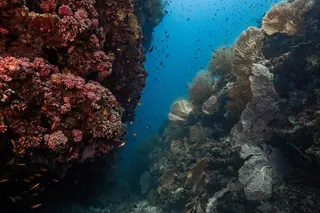
South Ari should not become a single-species checklist. Its reefs support a variety of corals, reef fish, turtles and other marine life. Conditions vary between locations, and some sites are better suited to experienced divers than casual snorkellers. For families, a flexible day might include a guided wildlife excursion followed by easier snorkelling elsewhere, or simply an afternoon enjoying the ocean from the yacht. Not everyone needs to enter the water to appreciate the destination.
05
What If You Don't See a Whale Shark?
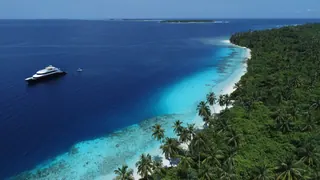
This is the question every wildlife traveller should consider. A good holiday should remain worthwhile even when nature refuses to follow the plan. South Ari's lagoons, coral reefs and surrounding islands offer plenty of reasons to spend time in the region. An afternoon without a whale shark can still bring remarkable fish, changing light and the quiet pleasure of being at sea. It also helps to avoid building an entire holiday around one promised encounter. Allowing several suitable opportunities may improve flexibility, but it never guarantees a result.
06
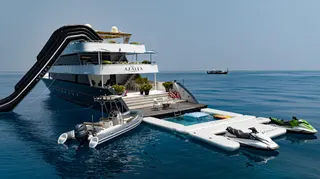
Exploring South Ari With Azalea
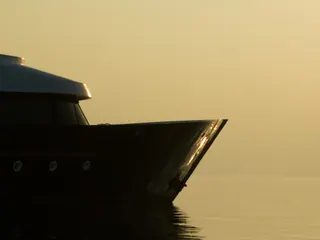
A private Maldives yacht charter can give guests the freedom to shape their time around different interests. Azalea has a dedicated dive dhoni, PADI dive facilities and a professional crew, allowing diving and snorkelling plans to be discussed alongside dining, relaxation and other activities. One group might want to prioritise marine wildlife, while another combines South Ari with nearby atolls or a wider island journey. The captain and dive team can advise on realistic routes, suitable conditions and the requirements of protected marine areas. The advantage is not unrestricted access. It is thoughtful planning around the destination and the guests.