01
How Underwater Dining Works
An underwater restaurant places its guest seating within an enclosed structure below the sea's surface. Large viewing panels allow diners to observe the surrounding marine environment while remaining inside a dry, controlled space. This differs from eating on an overwater deck, where the ocean is visible from above. The architecture creates an unusual perspective: the guest is below the waterline, looking outward into the surrounding reef or marine environment. What appears beyond the glass depends on natural conditions and the activity of marine life.
02
Ithaa: The Restaurant That Became an Icon
Visit Maldives identifies Ithaa Undersea Restaurant at Conrad Maldives Rangali Island as the world's first undersea restaurant. Situated in Ari Atoll, it is among the country's best-known underwater dining attractions. The name Ithaa means mother-of-pearl in Dhivehi. Its appeal lies in panoramic underwater views combined with the experience of dining inside an unusual architectural structure. But the reputation of a famous venue should not obscure the importance of practical details. Menu arrangements, access, dress requirements and reservations are controlled by the resort.
03
Different Ways to Experience the Ocean
The national tourism authority has documented other underwater venues, including SEA at Anantara Kihavah, 5.8 Undersea Restaurant at Hurawalhi and M6m at OZEN LIFE MAADHOO. Some focus on panoramic viewing windows, while others emphasise intimate dining or particular architectural features. The experiences also differ in the way guests enter the venue, the number of seats and how the restaurant connects to the wider resort. A memorable meal should be selected according to the experience the guests actually want, not solely because the location is below sea level.
04
What Can You Expect to See?
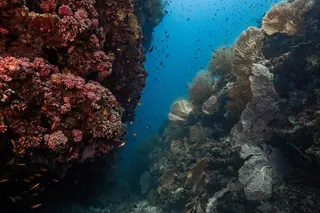
Underwater restaurant advertisements often show colourful reef fish and striking marine scenes. These are common aspects of the experience, although the types and numbers of marine animals vary naturally. Visibility changes with water conditions, time of day and location. Wild animals move naturally. A restaurant cannot promise that a turtle, ray or particular fish will pass the window during dinner. The most rewarding approach is to enjoy the architecture, surroundings and meal together.
05
A Reservation Is Not the Same as Island Access
Most underwater restaurants operate as part of individual resorts. A traveller staying elsewhere should confirm whether outside dining guests are accepted and what transfer or entry arrangements apply. For guests considering the best resorts in Maldives, underwater dining may be one attraction to compare, but it should not replace a broader assessment of accommodation and hospitality. Different resorts also offer distinct dining concepts that have nothing to do with underwater structures. The most famous restaurant is not necessarily the best fit for every group.
06
How Does It Compare With Private Yacht Dining?
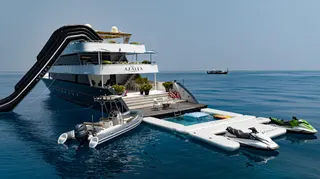
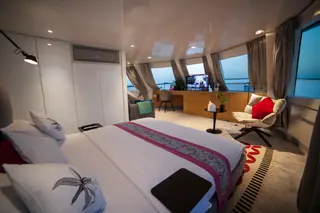
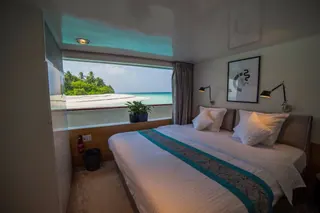
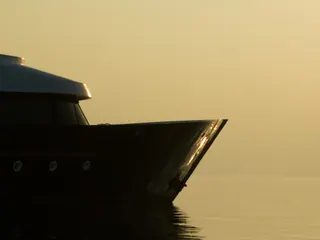
An underwater restaurant creates a particular encounter with the marine environment. A private yacht offers another kind of dining experience: a familiar table, a chef who can consider the group's preferences and the possibility of a changing ocean view. They are complementary rather than interchangeable. Guests enjoying a Maldives yacht charter might arrange a resort meal as part of a wider holiday, where the restaurant accepts external reservations and suitable transport is available. Azalea's private chef can also prepare dining experiences aboard, with special provisions and arrangements confirmed in advance. The important distinction is between dining beneath the ocean and dining while travelling across it.
07
The Ocean From a Different Perspective
An underwater restaurant does something unusual with a familiar experience. It turns a meal into an opportunity to see the marine world from a different angle. For travellers curious about architecture, dining and the ocean, that perspective can be memorable in its own right.