01
What Is Pole-and-Line Fishing?
Pole-and-line fishing uses individual fishing poles and lines to catch fish, typically one at a time. In the Maldives, the method is particularly associated with tuna fisheries. The Ministry of Fisheries' Tuna Fishery Management Plan identifies pole-and-line fishing as an important component of the national industry, alongside other methods such as handline fishing. The distinction matters. Pole-and-line and handline are not interchangeable terms, even though both use lines to catch fish. They can target different sizes and species and involve different operating practices.
02
Why Tuna Matters
Tuna has long occupied an important place in Maldivian food and livelihoods. Traditional dishes such as mas huni and garudhiya reflect its role in everyday cuisine. The fisheries sector also connects island communities with domestic markets and international trade. The government's management plan documents the commercial importance of skipjack and yellowfin tuna to the pole-and-line fishery. This is more than a tradition maintained for visitors. It is part of an active sector supporting employment, food preparation and processing businesses.
03
What Happens Aboard a Fishing Vessel?
Pole-and-line fishing depends on a combination of equipment, bait, fish behaviour and the crew's experience. Fishers must understand where suitable fish may be found and how to work together safely aboard. The visible act of catching a fish is only one part of the operation. Preparing the boat, maintaining equipment, locating fishing grounds and handling the catch all require skill. Visitors watching a fishing vessel from a distance see only a small part of that work. It deserves to be understood as a profession rather than an improvised tourist activity.
04
What Does Sustainability Mean Here?
Pole-and-line fishing is often discussed in relation to selective capture and avoiding some forms of unwanted catch. However, it would be inaccurate to describe every fishery as automatically sustainable simply because of its gear type. Management also depends on stock conditions, baitfish use, fishing effort, monitoring and compliance. The Maldives government publishes fisheries management plans precisely because fishing needs continuing oversight. A useful question for interested visitors is not whether a method is perfect, but how it is managed and what challenges remain. Responsible appreciation of a fishing tradition includes understanding that complexity.
05
Fishing and Island Identity
Many Maldivian communities have longstanding relationships with the fishing sector. Fishing influences local vocabulary, boat design, food preservation and community history. Visit Maldives encourages travellers to discover local livelihoods as part of understanding the country beyond resort accommodation. A respectful conversation with fishers or an appropriately arranged community visit can provide insight that is difficult to gain from a conventional sightseeing itinerary. It should never be assumed that working crews are available to entertain visitors or explain their operations on demand.
06
How Fishing Connects With Yacht Travel
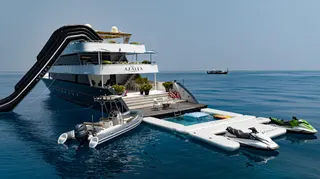
Modern private yachting and traditional commercial fishing have different purposes. Yet both depend on an understanding of Maldivian waters. Azalea's dedicated dive dhoni, professional crew and local captain operate within a maritime environment shaped by generations of island seafaring. Guests interested in the country's fishing heritage may discuss suitable cultural experiences, but these should be arranged with the relevant communities and individuals. The aim is to learn about real livelihoods without disrupting them.
07
The Story Behind a Familiar Ingredient
Tuna may arrive at a holiday breakfast as one component of a beautifully prepared dish. Behind it lies a much larger story of boats, skill, livelihoods and island communities. Understanding that story is another way of discovering the Maldives.