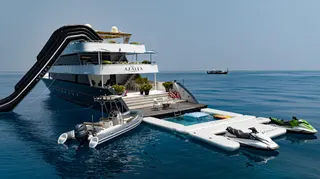
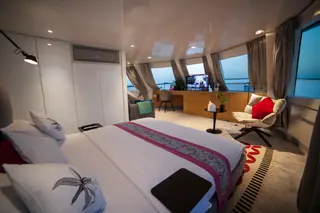
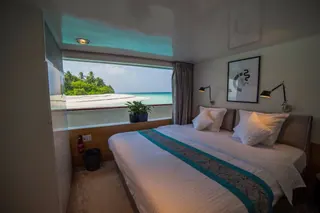
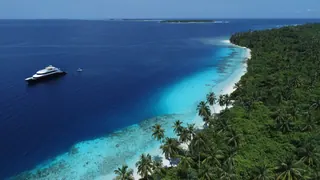
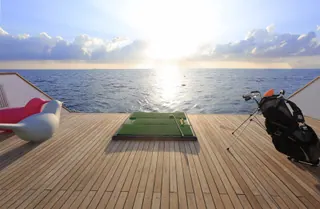
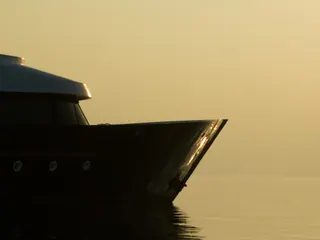
Aerial view of Azalea's private yacht anchored in a quiet Maldivian lagoon
Azalea JournalRead 4 min readUpdated 21 October 2026

The Maldives' Sea of Stars: What Really Makes the Water Glow?

Blue light flashing along the sand at night looks almost impossible, but it is a real biological phenomenon, not a guaranteed Maldives sight.

Start reading
Back to Journal
Book Your Voyage

The answer

The Maldives' Sea of Stars: What Really Makes the Water Glow?

Read
4 min read
Updated
21 October 2026
Request proposal

Imagine walking beside the ocean after dark when a wave breaks and leaves a trail of electric blue light along the sand. The glow lasts only a moment. Another wave arrives, and the water lights up again.

It looks almost impossible, yet this phenomenon has been observed on Maldivian shores. Often called the Sea of Stars, it has inspired some of the country's most widely shared night-time photographs.

What makes the experience fascinating is not simply how it looks, but the living organisms behind it.

The finest journeys begin long before the anchor is raised.

Azalea Journal

Why Azalea

Built for private Maldives charters

Complete Privacy

Your yacht is your private sanctuary, with space to relax and reconnect away from resort schedules.

Unrivalled Access

Reach remote islands, hidden lagoons and marine-rich atolls that resort-based travel simply can't.

Bespoke Experiences

Tailored itineraries, personal service and unforgettable moments built around your group.

Luxury Redefined

Five-star comfort, exquisite cuisine and an exceptional crew, at sea.

01

The Science Behind the Blue Light

According to Visit Maldives, the glowing-water phenomenon is associated with microscopic plankton known as dinoflagellates. Certain dinoflagellates produce light through a chemical reaction, a process called bioluminescence. Movement in the water can trigger brief flashes, making breaking waves and disturbed water appear to sparkle. This is different from sunlight reflecting off the ocean or artificial lighting beneath the surface. The organisms are living components of a marine ecosystem. Their glow is a natural biological response, not a permanent characteristic of the beach. NOAA also documents how dinoflagellates and other marine organisms generate light, sometimes as a defensive response.

02

Is Vaadhoo the Only Glowing Beach?

No. Vaadhoo is often associated with the Maldives' Sea of Stars in travel photographs, but Visit Maldives specifically cautions against the misconception that bioluminescence is limited to one island. Its official tourism reporting has documented glowing plankton across different atolls, including islands and waters around Greater Malé. The phenomenon can occur wherever suitable organisms and environmental conditions coincide. That makes the familiar question, "Which Maldives bioluminescent beach should I visit?" difficult to answer honestly. There is no permanently illuminated beach that visitors can book in advance with a guaranteed result.

03

Can You Predict When It Will Happen?

Not reliably. Visit Maldives identifies factors such as water temperature, salinity, tides and nutrients as influences on the presence of glowing plankton. The appearance and intensity of a display also depend on the organisms present and local conditions. A previous sighting does not establish that another will occur the next night or even during the same holiday. Travellers should be cautious about advertisements promising the phenomenon on a particular date. Nature rarely cooperates with a booking calendar.

04

Why Some Photographs Look So Dramatic

Night photography can make a glowing shoreline appear more vivid than it looks to the naked eye. Camera exposure, surrounding darkness and image processing influence the final photograph. This does not mean the phenomenon is imaginary. It means photographs cannot guarantee what a visitor will personally observe. If you're fortunate enough to see glowing plankton, allow yourself to enjoy the moment rather than spending the entire time trying to reproduce an image. The most remarkable detail may be how quickly each flash appears and disappears.

05

Should Visitors Enter the Water?

A glowing sea is not automatically a safe swimming environment. Night swimming introduces risks involving visibility, currents, marine life and the difficulty of observing conditions from shore. Do not enter unfamiliar water solely to trigger a display. Follow local guidance, avoid disturbing sensitive habitats and use appropriate supervision for any approved night-time marine activity. It is possible to appreciate a natural phenomenon without touching or collecting the organisms responsible.

06

Bioluminescence and Other Night-Time Marine Experiences

Visit Maldives also describes fluorescent night diving, where specialised lighting reveals fluorescent colours in marine organisms. Biofluorescence is different from bioluminescence. Fluorescent organisms absorb light and re-emit it at another wavelength; bioluminescent organisms produce their own light through a chemical reaction. The distinction is worth understanding, particularly when comparing marine activity descriptions. Both phenomena are fascinating, but they should not be advertised as the same experience.

07

Experiencing the Maldives After Sunset

A private yacht journey can introduce guests to different settings after dark, from quiet anchorages to the lights of an inhabited island. Azalea can be chartered throughout the Maldives, with routes designed around the guests' interests and suitable conditions. However, a yacht charter cannot guarantee glowing beaches, and the crew should never be expected to enter unsafe waters in search of them. If the Sea of Stars appears during a voyage, it is an extraordinary bonus.

08

An Ocean That Still Surprises

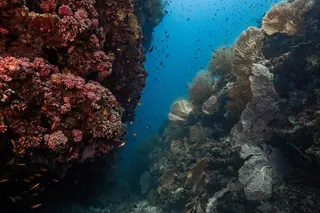
The Maldives is famous for what can be seen beneath its clear water during the day. Bioluminescence offers a reminder that the ocean has unexpected stories after sunset too. Sometimes the most extraordinary sight is one nobody could schedule.

Beyond the resort

Explore More. Experience More.

From vibrant coral reefs and manta encounters to private beach dinners under the stars — every day is different.

Explore experiences

Explore with Azalea

Ready to experience the Maldives aboard Azalea?

Share your dates, group details and interests directly with our charter team.

Enquire About a Private CharterOr continue below to explore the Maldives guide.

Maldives Experience Atlas

Discover the Maldives your way

Choose what interests you, explore matching places, and save the ones you want to remember.

Choose your interestsSelect one or several
37 matching places

Explore

37 places to discover

Swipe or scroll

Meet Azalea

Your Private Floating Sanctuary

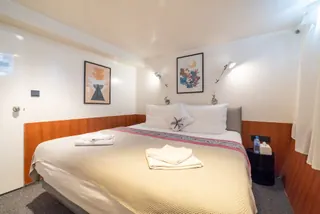
Azalea is a 41-metre luxury yacht designed for intimate voyages, offering space, elegance and comfort in every detail.

41mLength
9Cabins
18Guests
10Crew
Explore Azalea

Best time to go

When to visit the Maldives

Dec – Apr

Dry Season

The Northeast Monsoon brings calmer seas, lower rainfall and the clearest underwater visibility of the year.

May – Nov

Green Season

The Southwest Monsoon brings short showers, lush island greenery, fewer crowds and better value for longer charters.

Mid-Dec – Feb

Peak Season

Festive-period and February travel bring the highest demand for cabins, so these dates are the first to book out each year.

May – Nov

Manta Season

Plankton blooms draw manta rays and whale sharks to Baa and Ari Atoll, making this the strongest window for marine-life encounters.

Behind the lens

Moments from the ocean

Planning tips

Plan Your Perfect Voyage

A little planning goes a long way in ensuring an extraordinary experience. Here are our top tips for your charter.

Read our tips

Pick a route around what matters most to your group — diving, sandbanks, family comfort or a quiet private escape — and let the crew shape the days around it.

From manta encounters to sunset sandbank dinners, tell the team what you're hoping to see and do so it can be built into the route.

Light, breathable layers, reef-safe sunscreen and swimwear cover most days — the crew can advise on anything specific to your route.

Transfers, permits, dining preferences and daily timing are handled onboard, so the only decision left is what to do next.

Common questions

Planning details

Certain bioluminescent plankton, including dinoflagellates, can produce blue flashes of light when the water is disturbed.

No. Visit Maldives documents sightings across different atolls.

No fixed period guarantees sightings. Environmental conditions influence when displays occur.

Guests can express their interest, but the phenomenon cannot be promised and all marine activities depend on safety and conditions.

Private proposal

Ask about a night at sea aboard Azalea

Share your interest in the Maldives after dark, and the team can plan an evening route around quiet anchorages and suitable conditions. The Sea of Stars cannot be promised, but the journey still can be.

Ready to start planning your Maldives charter?