01
A Forest in the Middle of the Ocean
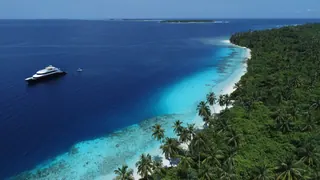
The Maldives Protected Areas authority describes Keylakunu as one of the country's unusually green islands. Much of its environmental importance lies in the eastern section, where mangroves and wetland habitats form a dense, forest-like landscape. Unlike the relatively open vegetation common across many coral islands, parts of Keylakunu contain substantial trees and interconnected wetland environments. The official protected-area description identifies red mangroves, small-leaved orange mangroves and grey mangroves among its important species. Together, these plants create a habitat of roots, shaded water and remarkably varied vegetation.
02
The Trees That Make Keylakunu Remarkable
One of Keylakunu's most distinctive features is its grey mangrove forest. The government describes exceptionally large specimens, with some trees exceeding 30 metres in height and particularly substantial trunks. These measurements are unusual for a landscape in the low-lying Maldives. Yet the island's importance cannot be reduced to the size of its trees. The mangroves provide habitats for other organisms, influence the wetland environment and help sustain the natural relationships between land and water. Their continued survival depends on preserving the wider ecosystem, not simply the most impressive individual trees.
03
A Refuge for Birds and Wildlife
Keylakunu is also important for birdlife. According to the government's protected-area description, a survey recorded 11 bird species on the island. The white-tailed tropicbird is among the notable birds associated with the area. The protected environment also supports nesting sea turtles along suitable sections of the shoreline. These records describe the ecological importance of Keylakunu rather than a visitor's guaranteed experience. Birds can move between habitats, and nesting activity is seasonal and sensitive to disturbance. A responsible nature visit should never involve approaching nests, handling wildlife or entering protected habitats without authorisation.
04
Why the Island Became Protected
Keylakunu received protected-area designation on 30 December 2018. The government identifies the island's wetland and mangrove ecosystems, bird diversity and associated reef environment as major conservation values. The designated area includes core and buffer zones. That distinction matters because different parts of a protected landscape may have different management requirements. The island's wetlands also function as a carbon sink, illustrating that healthy natural habitats provide environmental benefits beyond their immediate surroundings. Preserving such ecosystems is especially important in a country where land is limited and coastal environments are closely connected.
05
Is Keylakunu Open to Visitors?
Keylakunu is an uninhabited protected island, not a conventional tourist attraction. The government protected-areas portal provides a booking option for visits, but it does not list unrestricted forest trekking, camping or other recreational activities as automatically permitted. Visitors should check current requirements and follow the instructions of the relevant management authority. An organised visit, where approved, should prioritise observation and conservation rather than entering sensitive areas simply to obtain photographs. A protected forest is not an empty space waiting to become an adventure playground.
06
Exploring the Northern Maldives
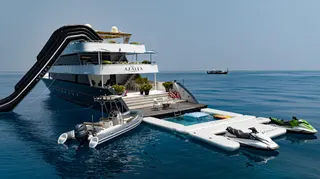
Haa Dhaalu and the surrounding northern atolls offer a different perspective on the Maldives. For travellers interested in nature, an extended journey may provide opportunities to learn about landscapes that receive far less attention than famous central-atoll dive sites. Azalea can be chartered for routes throughout the country, including the northern Maldives. Guests interested in Keylakunu can discuss a suitable itinerary, but any protected-area landing or inland visit must be separately confirmed through the relevant authorities. The yacht provides a comfortable base for exploring the region; it does not grant automatic access to protected habitats.
07
The Maldives Beyond the Palms
Keylakunu reveals a version of the Maldives that rarely appears in holiday photographs. Its appeal lies not in another perfect beach, but in the remarkable natural world growing behind it. Sometimes, the most extraordinary part of an island is the place that deserves to remain undisturbed.