01
Kandu, Thila and Giri
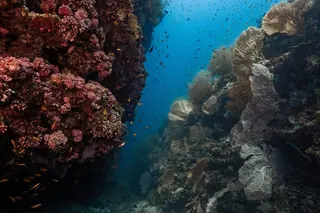
Nearly every site in the country is one of three shapes, and Dhivehi names them exactly. A kandu is a channel, the gap where water pours in and out of an atoll on the tide, dragging nutrients with it. Nutrients pull fish and fish pull predators, so this is where you find grey reef sharks parked in the flow and jacks stacked up in the blue. A thila is a pinnacle that stops short of the surface, rising off the atoll floor, self-contained and often spectacular, usually dived by circling it while the current does the swimming. A giri is the same idea but shallower, topping out near the surface. Gentler, and frequently outstanding for snorkellers. Three words, and every site description in the country suddenly makes sense.
02
Protected Areas and Dive Permits
Worth knowing before you plan a route, because it shapes what is possible. The Maldives maintains a national register of protected areas with its own official booking and permit portal, and a good number of the country's best-known dive sites sit inside one. Banana Reef, Fish Head, Embudhoo Kandu, Filitheyo Kandu and Dhigali Haa are all on it, which is to say the register is not a list of obscure corners but a fair sample of the sites people actually come here to dive. Requirements vary by site rather than following a single rule. Hanifaru in Baa Atoll is the strictest example. Scuba is prohibited there entirely, access is guided snorkelling only, bookings are made in advance and rangers manage numbers on the water. South Ari Marine Park works differently, requiring vessels and guides operating within it to be registered. Other sites are lighter still but remain on the register. The practical answer is to have the route checked rather than assume a site is open, which is the crew's job rather than yours.
03
North and South Male Atoll
Dismissed as the convenient option, which does them a disservice. The channels here dive seriously well, and Lankan in North Male is among the country's best-known manta cleaning stations. On a short charter this region earns its place precisely because none of the week disappears into transit.
04
Ari Atoll
If a single atoll had to carry the whole trip, this would be it. South Ari Atoll is the country's most dependable stretch of water for whale sharks, and the notable part is that sightings are possible year round rather than confined to a season. Its southern edge is designated as South Ari Marine Protected Area, the largest in the country, established under the Protected Areas Regulation, with vessels and guides working within it required to register. Ari Atoll splits administratively into North and South, and between them it runs long and mixes channel dives, thila dives and cleaning stations, with mantas working the eastern side through one monsoon and the western side through the other.
05
The Southern Atolls
Laamu, Gaafu Alifu and everything below see a fraction of the traffic. Big channels, serious current, coral in better condition in places, and a real sense of distance from anyone. Fewer boats, and sites that have not been worked over thousands of times a season. The catch is exactly that distance, which is why so few divers get there.
06
Which Season and Which Side of the Atoll
Diveable all year. The monsoon decides where rather than whether. Through the northeast monsoon the water is at its clearest and the eastern sides of atolls generally come into their own. The western monsoon trades some visibility for the plankton that brings in mantas and whale sharks, and shifts the good diving to the western sides. That is the single most useful planning fact available. The question was never which season, but whether your season matches the side of the atoll you intend to dive.
07
Why a Moving Base Matters for Diving
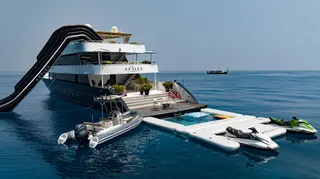
Current here shifts with tide, moon and monsoon. A channel that fires on an incoming tide can be flat three hours later. Which makes a fixed schedule a gamble. A boat that can reposition, and a captain who knows which channels are working this week rather than last season, turns the plan into something responsive. Hitting the right site at the right state of tide is most of what separates a dive you remember from one you do not, and that call gets made on the morning rather than months out on a spreadsheet.

-480.webp)