Maldives Yacht Charters: Private Routes, Atolls, Seasons and Booking Advice
Maldives yacht charters are not only about renting a vessel. The right private crewed charter links atoll selection, cabin planning, Dhoni support, reef access, airport logistics and seasonal water conditions into one realistic route.
5/5 TripAdvisor100+ Charters CompletedPrivate Groups Only
The answer
A Maldives yacht charter works best when the route is planned before the yacht moves.
The Maldives is a chain of coral atolls, not a single marina destination. A useful charter plan starts with arrival airport, charter length, guest profile, cabin mix, water priorities, preferred pace and season. Azalea then builds a private route around safe passages, reef access, sheltered anchorages, provisioning and the experiences your group values most.
Why Azalea
Built for private Maldives charters
Private-use charter format
Azalea is planned around one private group at a time, so meals, routes, water time and evening anchorages do not need to follow a shared cabin or resort schedule.
Crewed yacht plus Dhoni support
The main yacht gives cabins, dining and deck comfort while the Dhoni supports snorkelling, diving, reef transfers and shore visits without disrupting the onboard rhythm.
Destination planning, not a fixed circuit
Central, northern and southern atolls each suit different goals. Azalea narrows the route by season, transfer logistics, guest ability and the reason for the charter.
The vessel
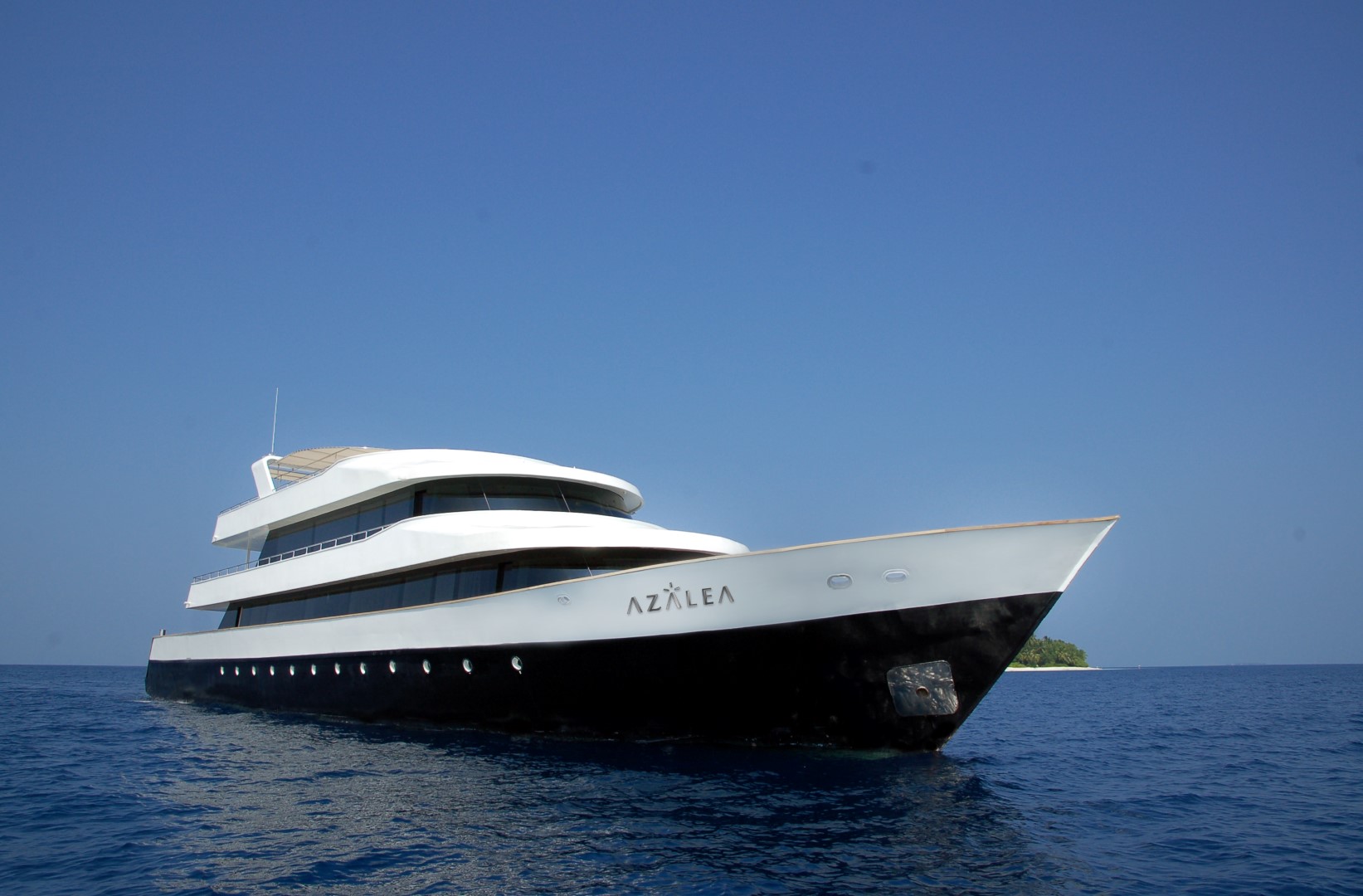
Azalea as your floating base
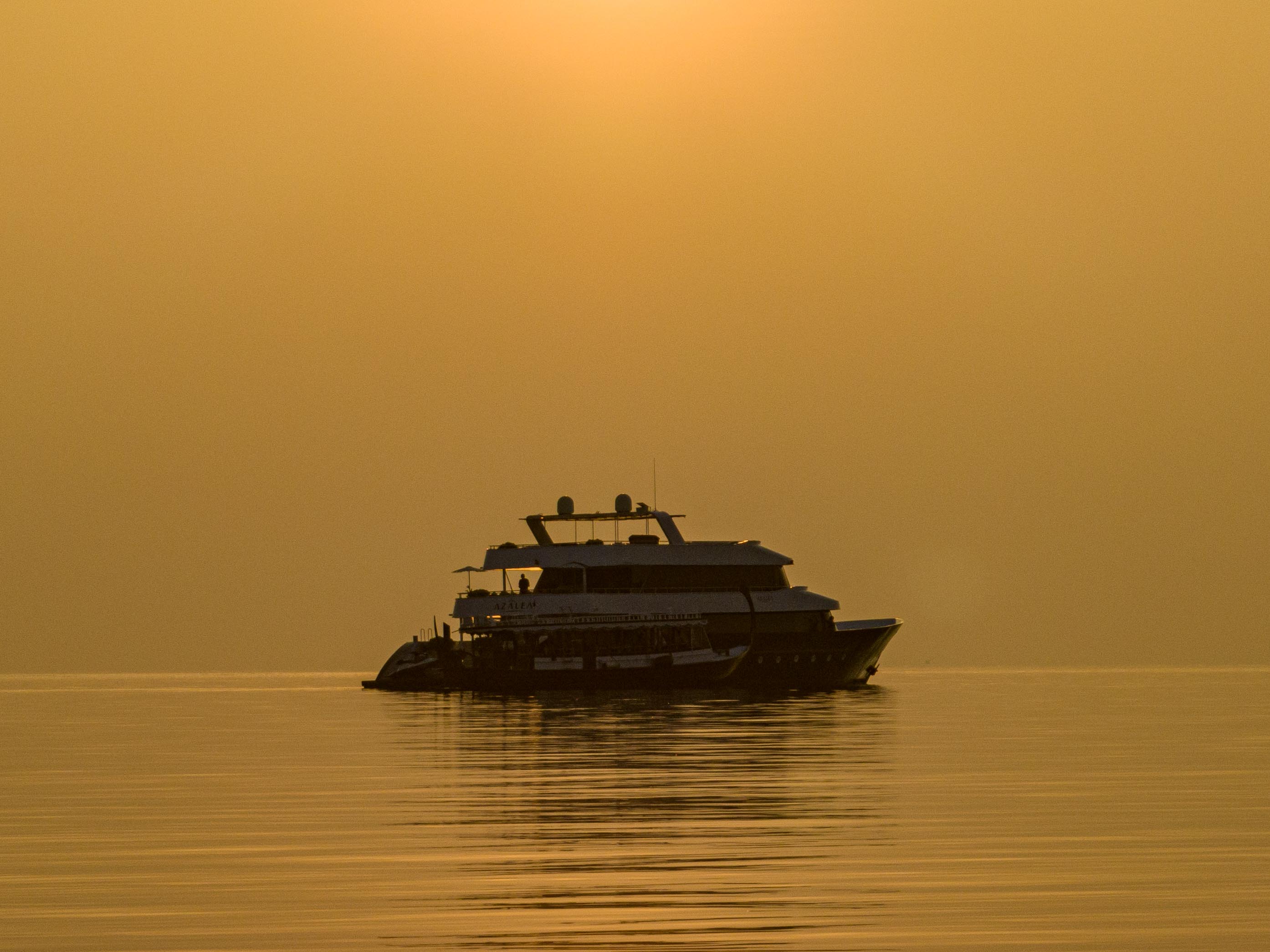
Azalea is suited to guests comparing Maldives yacht charters who need more than a day boat or resort excursion. The yacht combines private cabins, dining decks, lounges, crew service, water access and tender operations into one moving base for the archipelago.
Private use of Azalea for your group
9 en-suite guest cabins for up to 18 guests
Chef-led meals and onboard hospitality
Dhoni support for reefs, diving and transfers
Airport meet-and-assist planning around Velana International Airport
Custom atoll and activity planning before arrival
Route advice for reefs, sandbanks, local islands and protected anchorages
Clarified proposal scope for inclusions, optional requests and special provisioning
The Maldives has about 1,200 islands grouped across 26 natural atolls, with only a fraction inhabited. That geography is exactly why private yacht charters work: the yacht can move between reefs, sandbanks, lagoons and local islands instead of keeping the group fixed to one resort.
Best for: private groups, diving, snorkelling, sandbanks, celebrations and slow luxury cruising.
Main gateway: Velana International Airport near Male for most central-atoll charters.
Route logic: shorter trips stay central; longer trips can consider Ari, Baa, Raa or southern extensions.
Planning priority: sheltered anchorages, reef access, transfer timing and guest comfort.
Northern atolls: Baa, Raa and manta-season planning
Northern routes are usually considered when guests want quieter water, biosphere-reserve scenery, manta goals or a longer charter that justifies the extra movement. Baa Atoll is the headline name for seasonal manta planning, especially around Hanifaru Bay, but access rules and timing need to be handled carefully.
Best for manta-focused charters, photographers and repeat Maldives guests.
Works better with enough nights to absorb weather and transfer complexity.
Useful for groups who value quieter lagoons over a compact airport-to-yacht route.
Central atolls: Male, Ari, Vaavu and the strongest first charter route
Central atolls are the most practical starting point for many Maldives yacht charters. North Male and South Male simplify arrival logistics; Ari is useful for whale shark and dive goals; Vaavu adds reefs, channels and quieter anchorage possibilities when the charter length allows it.
Best for first-time Maldives yacht guests and 5 to 7 night charters.
Strong mix of reefs, sandbanks, local-island visits, diving and calm-water cruising.
Male-area routing protects international arrival and departure days.
Southern atolls: Addu, Gan and expedition-style charters
Southern routes can feel more remote and expedition-led. Addu and Gan are relevant for guests who want to go beyond the standard central route, but they require careful flight, provisioning, weather and charter-duration planning. This is not usually the simplest first Maldives yacht charter.
Best for longer charters, experienced yacht guests and remote-atoll ambitions.
Gan International Airport can support southern logistics when planned in advance.
Expect more operational planning than a compact Male-based route.
A strong itinerary does not try to include every postcard stop. It chooses the right mix for the group: reef snorkelling, manta or whale shark goals, sandbank meals, channel dives, sunset cruising, fishing, local-island walks, spa-style deck time and quiet anchorages away from resort traffic.
For water-first groups: reefs, thilas, channels, manta stations and whale shark routes.
For families: sheltered lagoons, sandbanks, paddleboards, easy snorkels and flexible meals.
For celebrations: private deck dinners, sunset anchorages and slower morning starts.
The strongest fit is a private group that wants privacy, route flexibility and crewed service without changing rooms. Azalea works well for families, friends, dive groups, milestone trips, couples travelling together and guests comparing a resort buyout with a moving private base.
Families can keep different activity levels together on one yacht.
Dive and snorkel groups can plan water access around ability and season.
Celebration groups can keep dining, music and deck time private.
A Maldives yacht charter can include local-island visits, Male stops or heritage context, but the plan should respect local customs. Dress expectations, alcohol rules, mosque areas, local community etiquette and landing permissions differ from private resort environments.
Use modest dress on inhabited local islands and in Male.
Alcohol service is handled in permitted tourism settings, not on public local islands.
Local-island stops should be planned with the crew rather than improvised late in the day.
Search results often mix motor yachts, sailing yachts, catamarans, liveaboards and by-the-cabin safaris. Azalea sits in the private crewed yacht category: one group, fixed cabins, onboard hospitality, route planning and Dhoni-supported water access.
Private crewed yacht: best for privacy, cabins, service and tailored routing.
Shared liveaboard: usually activity-led and sold by cabin, often for diving.
Catamaran or sailing yacht: can suit shallow-water or sailing-focused guests, depending on availability and comfort expectations.
Public price comparisons can be misleading because a real private charter proposal depends on dates, duration, guest count, cabin use, route scope, transfers, food, activities, permits, fuel assumptions and special requests. Azalea prepares proposals privately so inclusions and optional items are clear before confirmation.
Share guest count, ages and cabin needs before asking for a proposal.
Mention diving, surfing, celebrations, special diets and route ambitions early.
Compare what is included, what is optional and what requires advance provisioning.
November to April is the classic dry-season charter window, with December and January often in highest demand. The rest of the year can still work for the right group, especially when manta, surf or value-focused planning matters more than the simplest calm-weather expectation.
November to April: strongest fit for classic dry-season cruising and first-time guests.
May to October: discuss surf, manta goals and weather flexibility before committing to the route.
Peak dates should be planned early because yacht, crew and itinerary availability narrows quickly.
Where to begin: Male, Velana Airport and transfer planning
Most Azalea charters are coordinated around Velana International Airport and the Male area because it protects boarding, provisioning and departure timing. From there, the route can build into North Male, South Male, Vaavu, Ari or longer extensions depending on nights available.
Send international arrival and departure times before route planning is finalized.
Short charters should avoid wasting the first and last day on long repositioning.
Longer charters can consider one-way or more complex logistics only when practical.
The Maldives is not a marina-dense destination in the Mediterranean sense. Yacht planning relies heavily on safe anchorages, resort permissions, lagoon access, reef passages and tender or Dhoni operations. Some anchorages are deep, some reef entries require local knowledge, and some resort areas may involve permissions or fees.
Central atolls offer the most efficient mix of airport access, anchorages and reef days.
The Dhoni helps separate water operations from the comfort of the main yacht.
The captain should choose anchorages around weather, depth, permissions and guest comfort.
The booking process should be practical: brief the trip, check dates, confirm cabin fit, shape the route, clarify inclusions, then secure the charter. For the Maldives, advance planning matters because permits, provisioning, transfers, activity support and seasonal routing all affect the final proposal.
Meet the crew near Velana International Airport, settle into cabins, review the route and move to a protected first-night anchorage close enough to absorb flight delays.
02
Days 2-3: Central reefs and sandbanks
Use North Male or South Male for reef snorkelling, sandbank time, paddleboarding, sunset dining and an easy introduction to the yacht rhythm.
03
Days 4-5: Signature route focus
Aim the itinerary toward the trip purpose: Ari for whale shark and dive goals, Vaavu for channels and quieter water, or a slower family route with short hops and calm lagoons.
04
Days 6-7: Flexible wildlife, culture or resort-style rest
Keep room for a manta search, local-island visit, fishing, spa-style deck time, night snorkelling or a private celebration dinner depending on season and group energy.
05
Final day: Protected return
Return toward Male with enough time for weather, packing, breakfast, final swim and airport transfers without putting international flights at risk.
Common questions
Planning details
Azalea accommodates up to 18 guests across 9 private en-suite cabins.
Yes. Each charter route is planned around your dates, guest profile, sea conditions and preferred activities.
Most charters begin with arrival support near Male before the yacht cruises to the first sheltered anchorage.
A useful guide should cover atolls, seasonality, starting airport, charter types, reef access, anchorages, culture, permits, price factors, activities and the booking process. The best proposal then adapts those points to the actual group.
A yacht charter moves with the group, so cabins, meals, crew, reef access and anchorages can change through the trip. A resort stay is fixed to one island with excursions added around it.
Three to five nights can work for compact central-atoll cruising. Seven nights gives a stronger private yacht rhythm. Ten nights or more allows more ambitious atoll planning when weather and transfers support it.
Most private charters begin around Male and Velana International Airport because it simplifies boarding, provisioning and departure timing. Southern routes may involve Gan when the itinerary justifies it.
Possibly, but it depends on charter length, season, transfer plan and guest comfort. Azalea will usually recommend a realistic route rather than forcing too many distant atolls into one itinerary.
Yes, certain areas, reef access, protected zones, local-island visits and resort-related stops can involve rules or permissions. The practical details should be handled before the itinerary is confirmed.
Yes. Azalea is suited to private family groups because cabins, meals, water activities and daily pacing can be planned around one group instead of a shared schedule.
Send your dates, guest count, cabin needs, arrival details and preferred charter style. The Azalea team will shape a private proposal around the right route, season, inclusions and onboard rhythm.